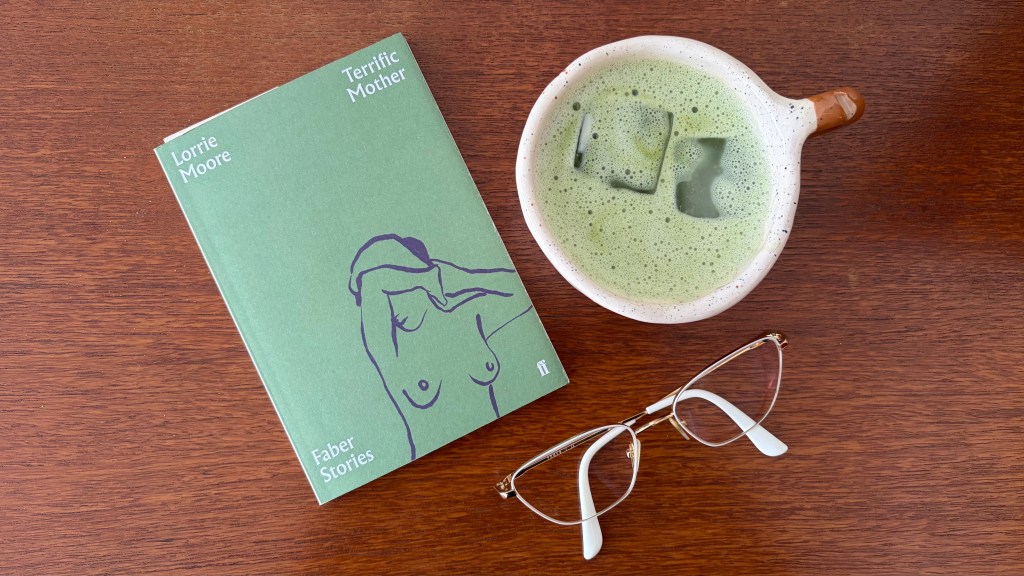
This month I did a lot of picking up a book, deciding it wasn’t right for my mood, and setting it aside again. Despite this, I still finished 7 books and a couple of essays too. I started the month with In the Miso Soup, which I devoured in a couple of sittings. I had another couple of quick wins with She Who Remains and The Visitor, whilst also trying to make progress on The Dutch House, which is one of the books I kept setting aside. I also read the novella Terrific Mother in one sitting and bashed out another Murakami, 69, in a couple of days, before rounding out the month with Black Swans. I started another Open Yale course, ‘Introduction to Theory of Literature‘, for which I read the essays What is an Author? by Michel Foucault and The Death of the Author by Roland Barthes. In total I read 7 books, 2 essays and 1,331 pages.
In The Miso Soup by Ryū Murakami (tr. by Ralph F. McCarthy)
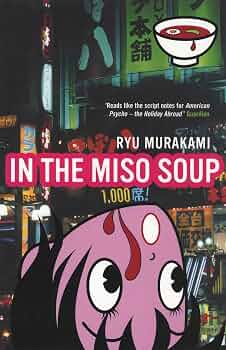
A random second-hand find last month, I really didn’t know what to expect from Ryū Murakami’s work, other than that his themes are often subversive and explicit. The story follows Kenji, a young man who makes money as a Tokyo ‘nightlife’ guide for tourists. He is hired by Frank, an American businessman, for three nights close to New Year. Frank’s behaviour and lies increasingly worry Kenji, and he slowly descends into a spiral of evil orchestrated by Frank.
The book puts the miso into misogynistic. And having read 69 too, I don’t think there’s much saving Murakami from that accusation, but if you don’t go into the book expecting feminism or compassion for sex workers, it’s a fabulous ride. It’s so engrossing that I could hardly put it down, each page threaded with so much tension that you feel anxious reading it. It’s like American Psycho if it stuck to the point and wrapped up in 180 pages.
I’d be tentative to recommend it to people given that it is fairly explicit and ‘messed up’, but I did find the writing very accessible and unpretentious, which added to the pleasure of reading it. It’s one of the best books I’ve read this year, although I feel like I need to lock it up in a cage next to the other books on my 2026 favourites so that it doesn’t contaminate their beauty.
She Who Remains by Rene Karabash (tr. by Izidora Angel)
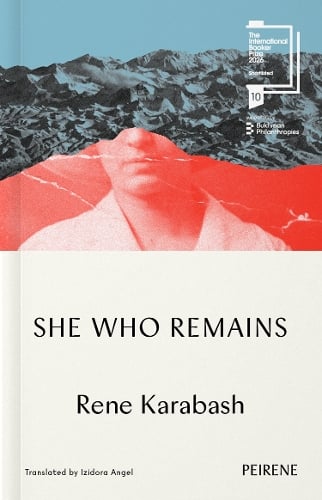
I’m not really sure where to start with this one. She Who Remains centres around the concept of ‘sworn virgins’, whereby a woman can renounce her womanhood and live as a man under the rules of the Kanun, a set of traditional customary laws in Albania. Our main character, Bekija, does so to avoid an arranged marriage, becoming Matija.
I’m shocked that this was nominated for the International Booker Prize, given the focus on authenticity and strong storytelling. The author Rene Karabash (real name Irena Ivanova) is Bulgarian, and stated in an interview that she has never been to Albania. Yes, she has spent many years researching, but it somewhat feels like she’s resting her entire novel on the back of customs and concepts of which she has no experience.
It might be forgivable if she used the concept of sworn virgins to explore an experience or theme about which she really wants to write – such as queer expressions of gender or the social treatment of men vs women – but this doesn’t happen. We gain no insight into Bekija’s many years as Matija, whether they felt themselves to be a a man and how they were treated differently based on their social expression of gender. We simply find out why Bekija made the choice to become a sworn virgin many years ago, recounted in the present day when they are being interviewed by a journalist.
It feels like Karabash found an intriguing, under-explored local custom and milked it for a story. I do not want to undermine the work that goes into researching and writing a novel based on real lived experiences, but I didn’t feel that She Who Remains went far enough to respect the use of a culture that the author herself isn’t a part of.
The Visitor by Maeve Brennan
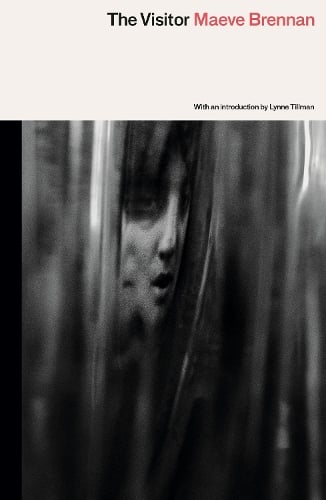
I can’t imagine the feeling of finding the manuscript of The Visitor, unpublished and lost since Brennan penned it in the 1940s, in a university archive in 2000. Some people have all the luck. I suppose I had my own mini version of this experience after finding the novel for £1 at my local village fete.
The Visitor is a tight, atmospheric exploration of family ties. Anastasia returns to her Dublin home from Paris after her mother dies, moving back in with her paternal grandmother. Her grandmother resents her for making the choice at sixteen to follow her mother to Paris, instead of staying with her father, who has since also passed away. It really captures how people can package up grief and resentment and put it all into another person, even if they are not the one responsible for those feelings.
It’s really gorgeously written and makes me excited to read more Brennan. The Visitor displays such a knowledge of the form of a novella, what to pack in and what to leave out to satisfy the reader and explore enough without trying to do too much.
Terrific Mother by Lorrie Moore
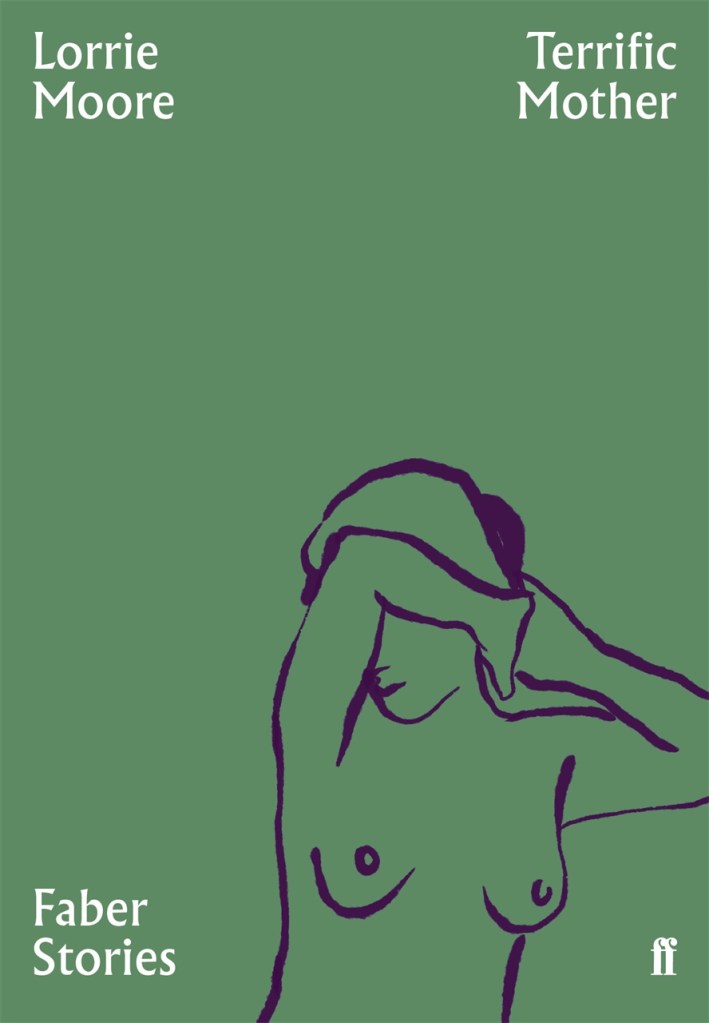
Part of the ‘Faber Stories’ collection for their 90th anniversary, Terrific Mother is a short story/novella by the American author Lorrie Moore. It opens with our protagonist, Adrienne, accidentally killing a friend’s baby at a picnic. Understandably, Adrienne spirals, and life is never the same again.
Moore writes with subtlety. She never explicitly states how the incident impacts Adrienne, but it is demonstrated through the way she relates to others and herself from there on in. I think one could read it as metaphor, with Adrienne never really killing her friend’s baby but perhaps having a miscarriage or just choosing not to have children. Viewed by society as the ‘death’ of the children she ‘should’ have had as a woman.
The blurb states that ‘Adrienne is living in a puritanical age, when the best compliment a childless woman can get is: ‘You’d make a terrific mother’.’ Times might not be so puritanical, but people still can’t seem to resist the urge to say it, even if a woman has just told them they don’t want children.
The Dutch House by Ann Patchett
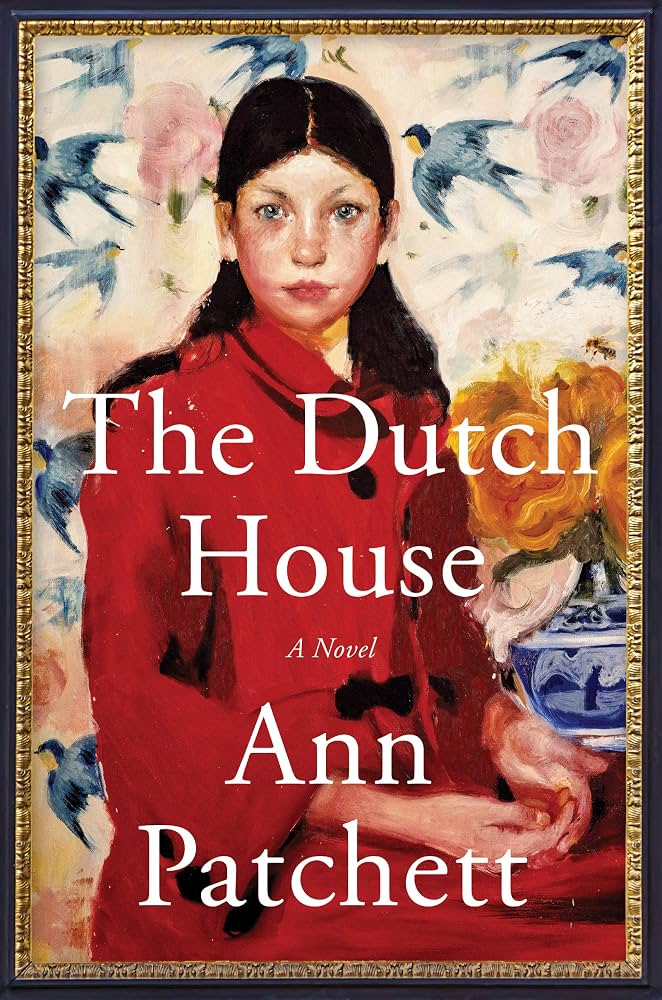
I started a book club at my work this month, and out of a choice of four books to read, The Dutch House won by a landslide (the other options were Gaining Ground by Joan Barfoot, The Girls by John Bowen, and The Feast by Margaret Kennedy). I’d put it on the list because so many people, including a couple of people at work, had recommended Bel Canto by Ann Patchett to me, and I’ve heard such great things about her writing in general. It’s also another one of csop‘s favourite books. I knew it was probably going to get chosen, and I was right!
The novel is narrated by Danny, who lives with his sister Maeve and their father Cyril in the grandest house in town – The Dutch House. Until their father passes away, and their stepmother cruelly kicks them out with nothing but their education trust fund to support them.
I have mixed feelings about this one. It was very immersive – I felt like I was surfacing from a very vivid dream when putting the book down. It felt like much of the plot was bunched up at the beginning and the end. The middle in my memory is a swirl of rather banal descriptions of a life which was still rather privileged despite the ‘poverty’ they’d been thrust into.
It was an interesting exploration of a close sibling relationship – but it felt a little too close at times. It was like Patchett sometimes forgot who her narrator was when describing Maeve (because who would describe their sister’s ‘long tan legs’ multiple times?). I found Danny quite sexist, which is arguably realistic for a man of the time, but it grated on me. Maeve was a ‘manic pixie dream sister’ and of course she didn’t get on with his wife, who was not like other girls and didn’t make him listen to horoscopes from the paper every morning. I didn’t feel there was much character development throughout the novel, with everyone remaining fairly one note.
I do see why people like this book. Her writing does feel like a tapestry is being woven in front of your eyes – but the tapestry wasn’t quite the particular style I was looking for.
69 by Ryū Murakami (tr. by Ralph F. McCarthy)
I enjoyed In The Miso Soup so much that I very soon picked up 69 by Ryū Murakami, which I also got second-hand last month. It follows high-schooler Yazaki as he navigates the turmoil of 1969 in provincial Japan. He’s thinking about rock ‘n’ roll, he’s thinking about revolution, but, most importantly, he’s thinking about pussy.
I’m not a big fan of the music of this era, which I think prejudiced me against this book a little bit. But despite the continuous references to cultural figures of the time, I did enjoy it. It’s much tamer than Murakami’s other work, but it still packs a strong punch with a compelling plot and some shock factor moments.
It is once again very sexist, but given it’s from the perspective of a teenage boy in the ’60s, I expected nothing less. Undesirable girls were described as ‘dogs’ and ‘porkies’ whilst Yazaki was willing to be crushed under the shoe of the ‘angel’ he worshipped. Yazaki is an extremely selfish character, but you come to expect it from him and enjoy the moments where he details the right thing to have done, and then immediately tells us that’s not what he did.
If you’re interested in reading Ryū Murakami but worried his work might be too explicit, I’d recommend this as a place to start, because it’s less graphic but still a great example of his writing style.
Black Swans by Eve Babitz
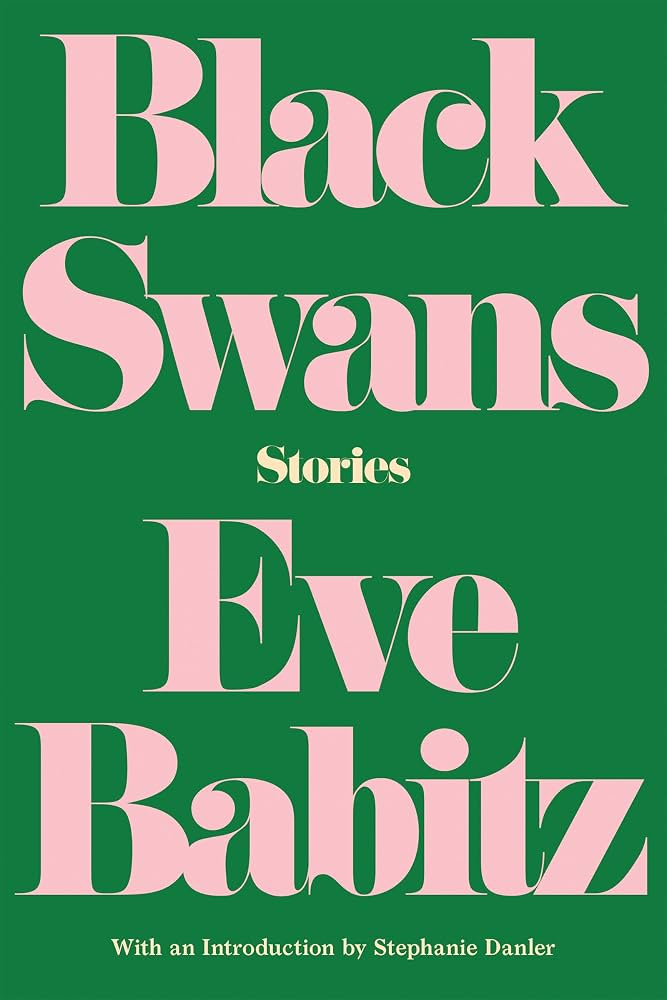
Black Swans, despite the deceptive subtitle of ‘Stories’, is a selection of Eve Babitz’s non-fiction work from the ’80s and ’90s. I read Slow Days, Fast Company a couple of months ago and loved it, so I picked up Black Swans when I found it at the London Review Bookshop. I have seen this cover on Pinterest many times.
Oh how I love Eve Babitz. She knows how to walk the line between essay and story perfectly. She really gets to the heart of human relationships, identifying what motivates people, what captivates them, and what breaks them. In this collection she explores her obsession with tango, the closest she ever got to getting married, and it opens with a brilliant piece on jealousy. The heat of LA permeates the collection, threading the stories together along with some recurring ‘characters’ and themes.
I’d recommend this and Slow Days, Fast Company to anyone looking for some sexy, intellectual non-fiction. As one Goodreads reviewer put it, it’s ‘a book for hot girls about a hot girl doing hot girl things’. I’m looking forward to reading more Babitz in the near future.


Leave a Reply